
I have noticed that some of my best childhood memories come from stories told at home. Whether it was a parent spinning a wild adventure or a grandparent recalling youthful days, these moments had a special magic. Storytelling does more than just pass the time. It weaves connections, builds imagination, and helps children see every day as full of possibilities. I believe that, with a little intention, anyone can bring storytelling into their home, sparking children’s minds and strengthening bonds at the same time.
Why storytelling matters for children
Before we step into the how, I want to answer the obvious question: Why should we tell stories at home? Stories are not just words strung together. They give children a safe way to understand feelings, solve problems, and picture things beyond what they know.
Stories are bridges to new worlds.
Children’s imaginations are wide open. When they hear stories, they are not just observers but also participants. They build mental pictures, feel for the characters, and often carry lessons with them.
In my experience, storytelling at home also:
- Helps with language skills and vocabulary.
- Encourages empathy and emotional awareness.
- Builds confidence to share their own ideas.
- Creates shared family memories.
It is not about perfection. It is about the magic of sharing something personal and alive.
How to start: Setting a storytelling mood
I have seen that children respond best when the atmosphere supports their attention. Preparing the right mood does not require fancy props or costumes. Sometimes, the soft glow of a lamp or a cozy blanket is enough. Here is what I like to do:
- Choose a relaxed time, like after dinner or before bed.
- Dim the lights or add a lamp to create focus.
- Put away distractions like phones or TVs.
- Invite everyone to get comfortable—pillows and blankets help.
The most important thing is your presence. When you are engaged, children sense that and follow along.
Everyday stories: Finding magic in the ordinary
Many people think stories need to be about dragons, talking animals, or distant lands. But in my view, some of the most engaging tales are rooted in daily life. I have made up spontaneous stories about a sock that goes missing, or a pet longing for an adventure in the yard. Kids love it when the normal flips into the unexpected.
The ordinary, told in new ways, becomes extraordinary.
Some ideas I like to use for everyday storytelling include:
- The curious object: Pick any item—an old spoon or a shoe—and invent its secret story.
- The day in reverse: Tell the story of the day, imagining what would happen if events happened backward.
- The family pet’s point of view: Share a story as if you are the cat or dog, describing how the world looks to them.
Encouraging children to join in
Children are natural storytellers if given the chance. I have found that asking open-ended questions can pull them into the story or even prompt them to create their own. Examples include:
- “What do you think happens next?”
- “How does our hero solve this problem?”
- “If you were in the story, what would you do?”
Once children get comfortable, they often want to become the storyteller themselves. Sometimes it takes letting go of tight control. If the story goes somewhere silly or unexpected, just enjoy the ride.
Inviting children to add details, sounds, and endings strengthens their creativity and sense of ownership.
Adding props and drawings for younger kids
For younger children, visuals really help. When my kids were small, I sometimes grabbed stuffed animals or simple household objects to become story characters. I also encouraged them to draw scenes as we talked.
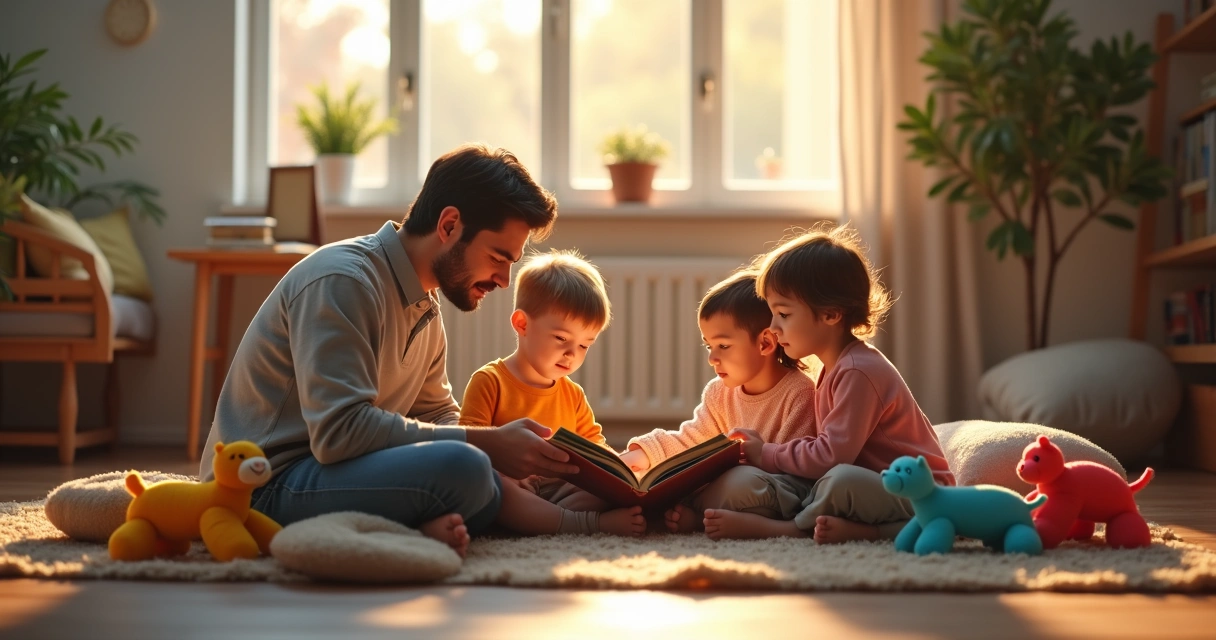
I have learned that adding a prop can help the youngest focus and get the feel of the story’s shape. These aids are not distractions but pathways to deeper engagement. Sometimes, simply asking children to “draw what happened next” gently expands the story beyond words.
Making up stories together: Collaborative fun
If you want to really spark imagination, try trading lines or ideas with each other. I have played a simple game at the table where one person begins a story with a single line, and each person adds the next. For example:
“One sunny morning, a yellow balloon escaped through the window…”
This technique lifts any pressure for one person to carry the story. Instead, it turns into a rolling adventure fueled by all imaginations at the table.
A few favorites for collaborative storytelling:
- Taking turns adding a line to the story.
- Rolling a die, and whoever rolls the highest adds the next twist.
- Using random words from a jar and working them in as the story goes.
Not every story will make sense, and that is the fun. Sometimes, the unexpected results are what you remember most later.
Mixing story and movement
For children who are more active or wiggly, combining stories with movement works wonders. When I see energy is high, I add action:
- Read or invent a story with sound effects and ask your child to make the sounds.
- Invite children to act out different characters.
- Encourage movement—have your child explore “the jungle” under the dining table or “fly” around the living room.
This blend turns passive listening into lively participation. In my experience, children remember stories more vividly when their whole bodies join in.
Bringing in family history and memories
One special way to make stories meaningful is by weaving in real family memories. I enjoy telling my kids about when I was young, or sharing stories I heard from grandparents. Often, children love knowing about funny mishaps, adventures, or simple moments from your past.

Storytelling in this way connects past and present, strengthening identity and family bonds. You might be surprised how many questions children have about your own stories. It is a gentle entry into bigger conversations about life and growing up.
Simple tips for memorable storytelling
These are some tricks I have picked up over the years:
- Keep it simple. Focus more on the feeling than the perfect words.
- Use expressive voices for characters—it helps small listeners keep track of who is who.
- Look for little moments in the day—sometimes walks or waiting in line offer the best opportunities.
- Let go of perfection. Even a jumbled story can bring smiles and laughter.
Storytelling at home is not about being an expert but about sharing time and imagination.
Whether you tell stories once a week or every evening, what matters is showing that creativity has a place in your family life. Over time, storytelling becomes something your children look forward to and even lead themselves. I have seen how quickly a good tale can turn an ordinary day around.
Final thoughts: Keeping the spark alive
I believe storytelling at home is one of those gifts that grows the more we use it. Even if you start small, those shared moments soon become some of the brightest parts of childhood—simple, memorable, and full of wonder. Do not worry about your story being perfect or dramatic enough. Trust that the act itself is enough to set imaginations free.
A story told with love is never forgotten.