
When I think back to my own childhood weekends, the moments I remember most fondly never involved a glowing screen. Today, though, it is clear that screens can take up so much of our children’s time if we do not offer other choices. In my opinion, planning a few hands-on activities can transform their weekends, spark creativity, and build stronger family bonds. Here, I share eight simple, unforgettable ways I have seen kids light up, learn, and connect during screen-free weekends.
Why screen-free activities matter
Before I jump into the activities themselves, I want to say a word about why they are so worth the effort. I have noticed that setting aside time for screen-free activities brings out laughter, movement, and old-fashioned curiosity in kids.
Quality time is what children remember most.
Besides, these types of activities help foster patience and social skills, which even the best digital games simply can’t replace. For me, seeing kids more engaged and less irritable after a day away from screens really speaks for itself.
1. Building an indoor fort
Whenever I have asked a group of kids what makes them happiest on a rainy Saturday, the idea of building a fort always comes up. Pillows, blankets, and a little imagination turn any living room into a land of adventure. I normally suggest starting with a couple of sturdy chairs and tossing a sheet over the top. Soon, everybody has their own role – fort guard, story teller, or snack supplier.
The best part about this activity is how freeform it is. Kids naturally collaborate as they stack cushions, hang blankets, and problem-solve together. By the end, they build not just a physical space, but shared memories too. Some of my favorite rainy afternoons were spent crouching under a blanket ceiling.
2. Backyard treasure hunt
On sunny weekends, I have found that a treasure hunt gets kids moving and laughing right away. You do not need to buy special equipment either. Just gather a few everyday objects, create some clues on small slips of paper, and hide the “treasure” around your garden or nearby park.
- Clue 1: “Look under the biggest tree!”
- Clue 2: “Where do the flowers bloom yellow?”
- Clue 3: “Find the rock shaped like a heart.”
The reward at the end could be a small trinket, a healthy snack, or even a funny certificate for the best detective. I am always surprised at the happiness on a child’s face when they discover the final hiding place. Working together, kids learn patience, teamwork, and the thrill of exploration.
3. Simple science experiments
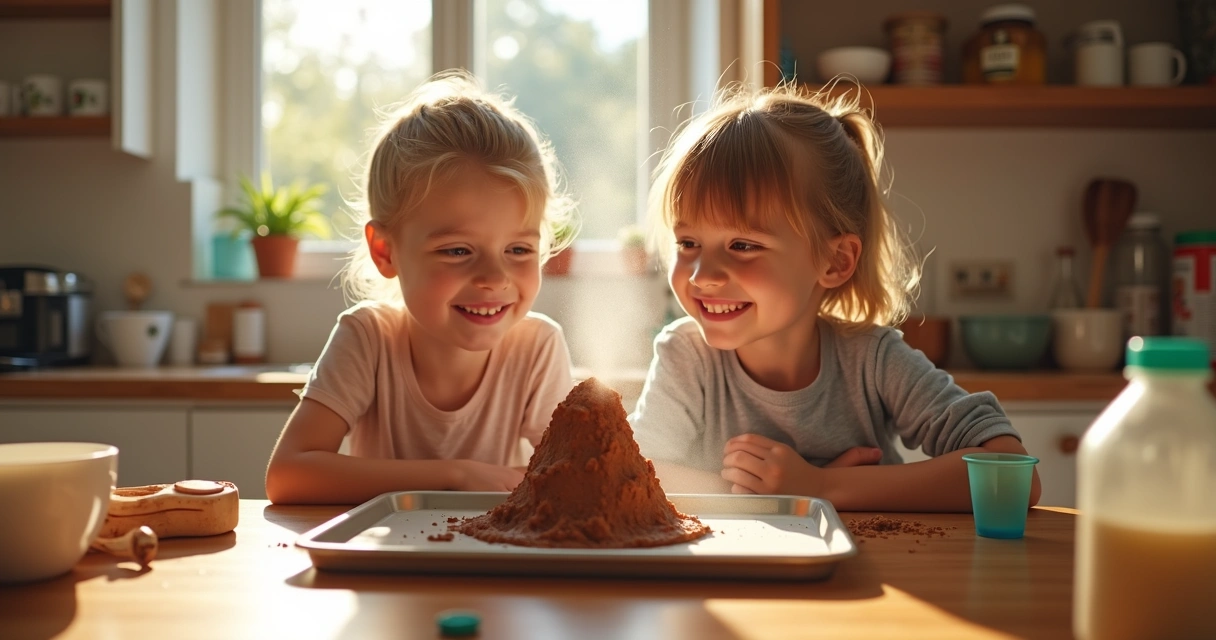
Fun and learning can go hand in hand, especially when science is involved. Some of my most successful afternoons with kids have included kitchen experiments like making a volcano erupt with vinegar and baking soda or creating homemade slime. Safety is obviously important, so I always keep an eye on ingredients and cleanup.
I once watched a five-year-old light up as her homemade volcano fizzed over, and she explained why red “lava” poured out. These small moments create a sense of wonder that no video can match. Most importantly, these activities are a way for children to be a little messy, ask questions, and feel proud of something they created themselves.
4. Creative arts and crafts
I have always believed that setting out some colored paper, glue sticks, and crayons can lead to magic. There is something joyful in watching children come up with decorations, hand-made cards, or even simple finger paintings. I like to offer a theme (such as “under the sea” or “my dream house”) and let them take it from there. These art sessions are not about making “perfect” pieces. They are about the process, and the mess is part of the experience.
One rainy afternoon last year, I watched a boy turn a cardboard box into a spaceship, complete with portholes and “mission control” panels drawn in blue marker. That spaceship became a centerpiece of his play for weeks. To me, these activities develop problem-solving and self-expression, with no battery required.
5. Cooking or baking together
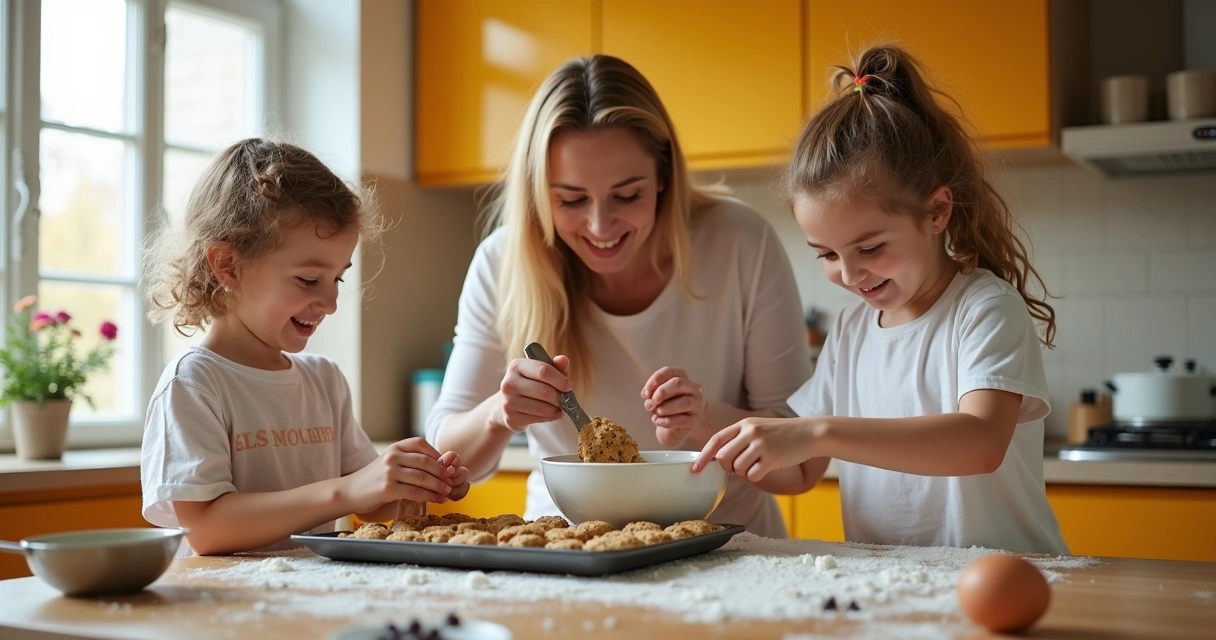
In my own family, nothing brings everyone together quite like making homemade treats. Even small children can help with tasks like stirring, pouring, or decorating cookies. I have spun dozens of stories over mixing bowls, especially when making weekend pancakes or muffins.
Besides being fun, cooking teaches math, patience, and the joy of sharing. The pride that children feel when they share what they baked never fails to make me smile. If you are worried about mess, I recommend picking recipes with fewer ingredients or those that need only one bowl. The time spent together, for me, is always worth the cleanup.
6. Gardening or planting seeds
Kids are almost always intrigued by anything that grows. I have seen firsthand how much pride a child feels watching a seedling sprout, or tending to a patch of herbs in a plastic pot. For those with gardens, letting kids dig, plant, and water their own section gives them ownership and a gentle lesson in responsibility.
Even a tiny windowsill project using recycled yogurt cups and some beans can be exciting. Gardening is a peaceful, hands-on way to connect children with nature and the passage of time. Whenever sprouts poke through the soil, the kids I am with notice and celebrate each change.
7. Outdoor obstacle course
Energy seems endless on weekends. When my own kids or their friends need to run around, I love turning the backyard or a local park into an obstacle course. Sometimes it is as simple as hula hoops, cones, and a rope to hop over. Other times, I rope off “balance beams” with sticks or draw chalk lines for a jumping contest.
- Crawl under a table
- Jump over a rope
- Spin around a cone
- Hop from one stone to another
The giggles and playful competition make every minute worth it. Every course can be changed to fit the space and age of the kids, and their creativity grows as they invent new challenges.
8. Story time and make-believe
Ending the day with stories never feels old to me. Sometimes I pick out favorite books. Other times, I let the kids invent their own tales or put on mini plays with simple props and costumes. These calm sessions often feel magical as children act out adventures and bring their ideas to life.
One of my favorite memories is seeing a group of cousins create a “royal court” out of scarves and kitchenware, assigning roles and telling stories for hours. Storytelling does not just entertain children – it helps them build language skills and empathy.
How to make these activities part of your routine?
I believe the key is to keep things simple and allow for creativity. It helps to have a rough plan, but the joy comes when kids put their own spin on each activity. Whether you try one or several of these ideas, the shift away from screens will be noticeable, both in behavior and in the special memories formed.
Simple, unscripted play brings families closer.
I hope these ideas spark a weekend full of discovery, laughter, and connection for the children around you.