
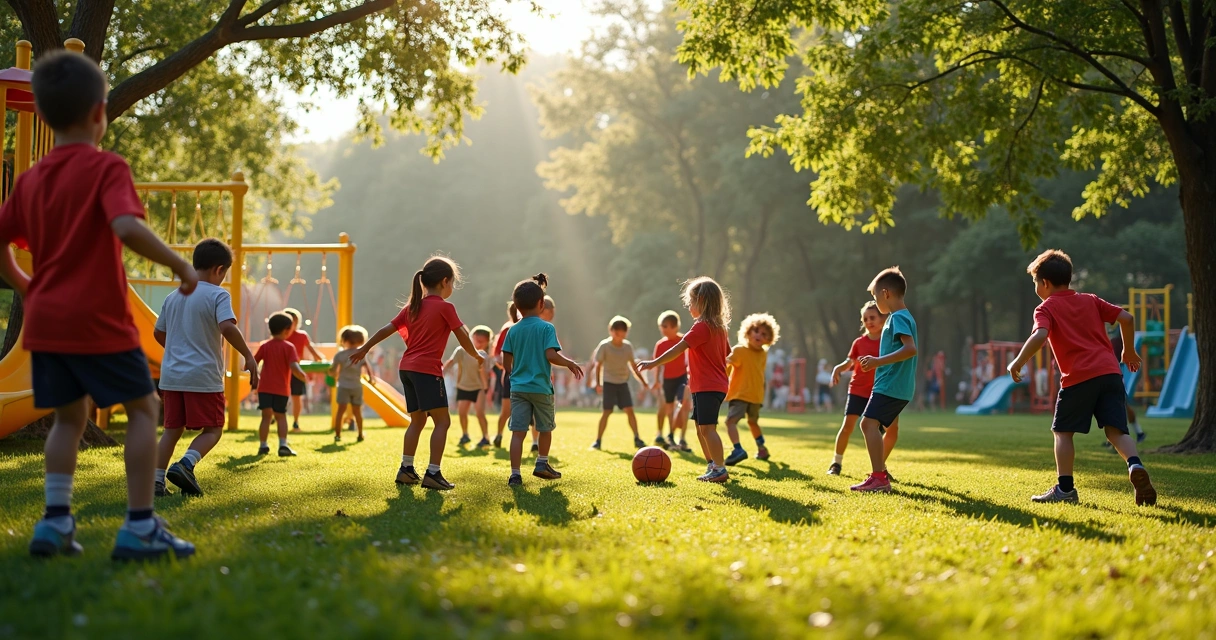
It is not hard for me to remember the joyful sound of children’s laughter from the neighborhood park, even as an adult. Sometimes, when I walk past a sprawling green playground full of activity, I pause to watch. There are shouts, cheers, and the occasional squabble. But beyond all the noise, I see small moments that speak volumes: a child passing a ball, two kids trading turns at the swings, a group huddling before a race. These aren’t just moments of fun. In my view, they are lessons about teamwork and sharing, taught not in classrooms, but in parks, fields, and schoolyards.
Why playground games go beyond just play
Growing up, games like tag, hide and seek, soccer, and hopscotch were more to me than simple entertainment. Each game came with rules. Most relied on more than one person. Looking back, these unspoken lessons about working together and giving others a chance have shaped many of my adult values. Watching the playground as an adult, I realize how much these spaces prepare children for life beyond childhood.
How teamwork looks in playground games
When I think of teamwork, images of children building sandcastles or dolphins swimming in groups come to mind. At a playground, teamwork is everywhere. There are helpers, listeners, planners, and peacekeepers. Sometimes, all these roles blend together in the space of a single activity.
- Organized group games: Games like “Capture the Flag” or “Red Rover” need everyone to work toward a shared goal. Players make quick plans and count on each other to succeed.
- Building trust in relay races: Passing a baton is not just about running. It is about trusting a teammate to be ready, alert, and supportive.
- Problem-solving as a group: I often see kids trying to figure out how to set rules for a new game. They argue, explain, and eventually settle on something fair together.
Playground teamwork is learning how to support friends and reach goals together. Each success is shared, and each mistake is understood as part of the team’s journey.
The subtle art of sharing
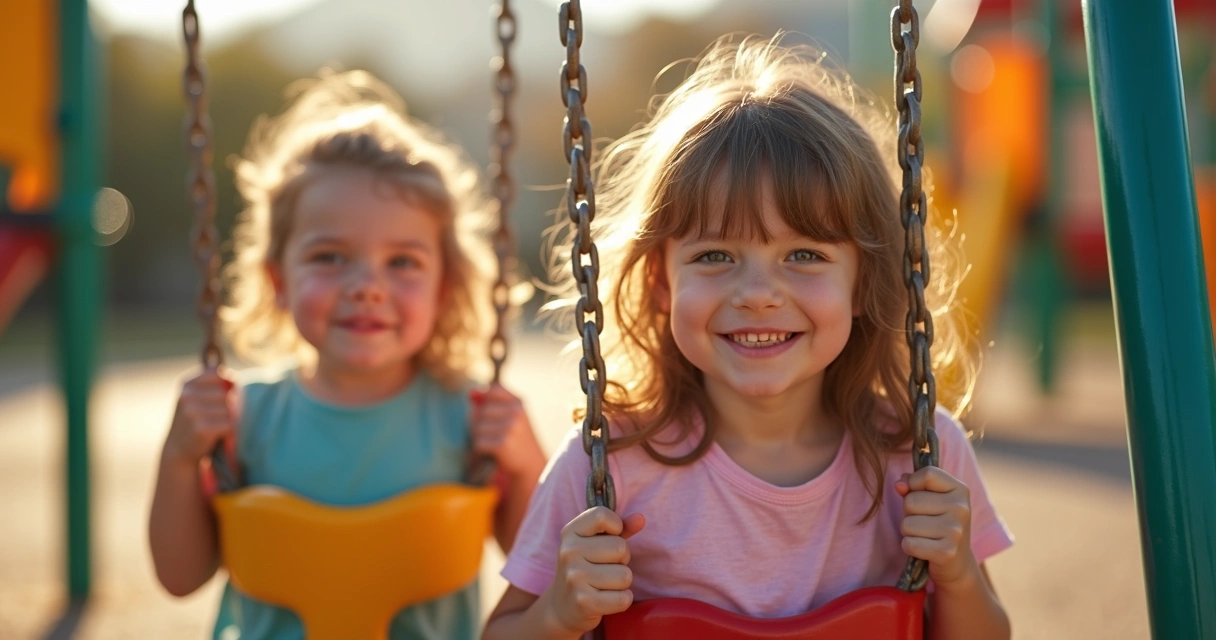
Sharing can feel natural on the playground when done right, yet I remember how tough it sometimes felt as a child. The favorite swing was always in demand, and so was the last spot on a seesaw. What struck me is how children learn quickly to take turns, exchange toys, and invite others into their games, sometimes with a gentle reminder from a peer or adult, but often on their own.
Fairness feels best when chosen, not forced.
Sharing on the playground extends to more than objects. It includes:
- Letting someone else be “it” in tag
- Giving up a turn, even when it is hard
- Welcoming a newcomer into the middle of a game
- Listening to someone else’s idea for what to play next
Each act is a tiny trade, where friendship and patience are exchanged for a moment of personal satisfaction.
Learning communication from games
Whenever I stop to really listen to children at play, I notice a rhythm of conversation. I hear planning, arguing, encouragement, and laughter, all bundled together. Sometimes the group must settle a rule dispute. Other times, a child feels left out and expresses it. These little scenes help children say what they want, listen, and negotiate.
Some examples of what they often say:
- “If you help me build this fort, you can choose the next game.”
- “Let’s agree that everyone gets two turns each.”
- “Can we try your idea first, then mine?”
These negotiations develop skills that serve children for life: clear expression, patience, and compromise. I believe that the playground is a real-world classroom for these abilities, and the progress children make here often surprises me.
What can go wrong, and why mistakes matter
No playground is perfect. In my experience, the occasional argument, sulk, or even full-blown tantrum is part of the process. These setbacks are not failures; they are opportunities. When a child refuses to share, or a team leaves someone out, emotions run high, but lessons are learned. With a little guidance, children often mend fences quickly and stronger friendships can result.
I’ve seen these situations resolve in many ways:
- A child apologizes for not sharing a toy
- Teams shuffle to make sides fair
- A hurt child’s feelings are acknowledged
- The whole group votes on a new rule
Mistakes create space for empathy and growth.
One detail that stands out to me is how quickly forgiveness comes on the playground, and how resilient friendships can be. In some ways, I think children are better at this than adults.
How different games develop different skills
Not all games are equal when it comes to teamwork and sharing. I notice that games involving teams, cooperation, or shared equipment demand a greater focus on working together. Here’s how specific games help foster these skills:
- Tag: Teaches quick thinking, fair play, and how to handle both winning and losing gracefully.
- Soccer, basketball, or relay races: Develop direct teamwork. Success is shared and mistakes are supported and encouraged.
- Imaginative games (“house,” “pirates,” etc.): Encourage children to collaborate, negotiate roles, and listen to each other’s ideas.
- Board or card games outdoors: Offer chances for turn-taking, patience, and accepting both wins and defeats in a friendly way.
Physical games often bring children together, but even more quiet games like drawing with chalk invite others to join and share space and materials. These different experiences fulfill different needs, but together they work to shape understanding and kindness.
The role of adults in guiding lessons
While children discover a lot on their own, I think the gentle touch of an adult nearby can help things along. I have noticed children often look to adults for support, guidance, or to help mediate a dispute.
- Reminding children to take turns without stepping in too soon
- Suggesting how to include a left-out child
- Encouraging kids to use their words instead of shouting or grabbing
But sometimes, simply watching and waiting is best. Children solve more on their own than many adults expect, if given the time and space.
What I learned by watching (and playing)
My own experiences as a child, and later as a parent, have confirmed for me that the playground is truly a place of learning. I have watched shy children find their voices, energetic ones learn patience, and those who hesitate become more willing to share. The memories we hold from these moments form a quiet foundation for the friendships and partnerships we build later in life.
Childhood games are practice for the real world.
I am convinced that the lessons in teamwork and sharing I learned on the playground have traveled with me as I’ve grown. They help me solve problems with others at work, listen patiently, and celebrate shared successes. Watching new generations take turns, cheer friends on, or invite a lonely child to join, I am reminded that the simplest games can teach the deepest lessons.